




Tree Preservation During Construction Guide
- Gary Zimmerman - Certified Arborist - Tree Masters
- 4 days ago
- 6 min read
When a jobsite gets moving, trees usually start losing ground before anyone notices. A truck cuts across the root zone, fill dirt goes down near the trunk, or a trench slices through major roots. This tree preservation during construction guide is built for homeowners, builders, property managers, and developers who want to keep good trees standing without creating delays, safety problems, or expensive losses later.
In North Texas, preserving mature trees is often worth the effort. Established oaks, pecans, elms, and other landscape trees add shade, curb appeal, drainage benefits, and real property value. But construction pressure is hard on trees, especially when schedules are tight and multiple trades are sharing the same space. Saving a tree takes planning before the first machine arrives, not after the canopy starts thinning.
Why tree preservation needs to start before construction
Most construction damage happens below ground. Roots do not stop at the edge of the canopy, and they are not built to handle repeated traffic, excavation, or grade changes. A tree can look fine during the project and still decline months or even years later because the root system was compromised early on.
That delayed decline is what causes confusion. Owners may think the tree was successfully preserved because it survived the build, only to see dieback, insect pressure, weak regrowth, or full failure later. By then, the cause is harder to correct and removal becomes more likely.
The best time to protect trees is during site design and pre-construction planning. That is when you still have options. You can shift a driveway a few feet, reroute utilities, adjust staging areas, or decide which trees are realistic candidates for preservation. Once heavy equipment is on site, every fix becomes harder and more expensive.
A practical tree preservation during construction guide
The first step is deciding which trees are worth protecting. Not every tree should stay. A tree with major decay, poor structure, severe lean, root disease, or storm damage may not be a good preservation candidate. On the other hand, a healthy, well-placed mature tree often deserves a serious effort because replacement takes decades.
This is where an arborist matters. A qualified assessment can identify species, health, structure, expected tolerance to disturbance, and the amount of root protection the tree will need. Some trees handle nearby work better than others. Some do not. A preservation plan should be based on the actual condition of the tree and the realities of the project, not guesswork.
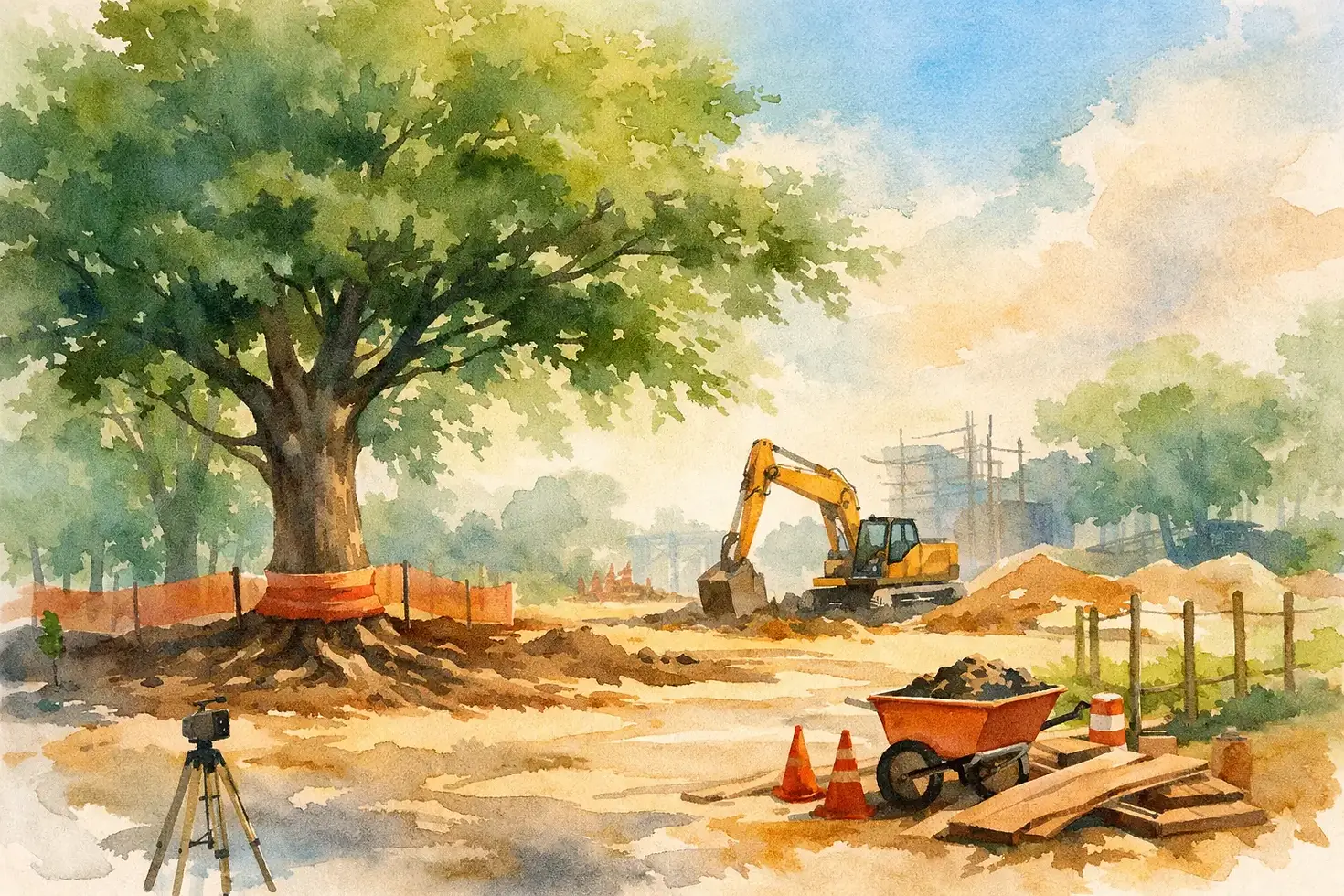
Once preservation trees are identified, protection zones need to be established clearly. In many cases, fencing should go up around the critical root area before demolition, grading, or material delivery begins. The fence should be visible, stable, and treated as a no-entry area. If crews can move it easily or store materials inside it, it will fail.
That fenced area should protect more than just the trunk. The real goal is to limit compaction and root disturbance. Parking equipment, washing out concrete, stacking brick, storing pipe, or even repeated foot traffic inside the protection zone can do damage. Trees are often harmed by routine site activity that does not look dramatic at the time.
Pruning also has a role, but it needs to be done correctly. Clearance pruning for equipment access may be necessary, and structural pruning can reduce risk before work begins. What should not happen is aggressive canopy thinning to "balance" root loss or random limb removal by crews trying to make room. Poor pruning adds stress at the exact moment the tree needs stability.
The most common ways construction damages trees
Soil compaction is one of the biggest problems on North Texas jobsites. Tree roots need oxygen and water movement through the soil. When equipment repeatedly passes over root zones, the soil gets compressed and roots struggle to function. You may not see the damage right away, but the tree will.
Grade changes are another major issue. Adding soil around a tree can suffocate roots and trap moisture against the base of the trunk. Removing soil can expose and sever roots that were critical to stability and water uptake. Even a few inches of change in the wrong place can have serious effects.
Trenching for utilities causes direct root loss. If trenches cut through structural roots near the trunk, the tree can become unstable as well as stressed. In some cases, boring under the root zone is a better option than open trenching. It depends on depth, distance, species, and site conditions, but utility planning should always account for tree preservation early.
Chemical exposure matters too. Fuel spills, washout water, excess herbicide, and construction debris can alter soil conditions fast. Trees are not separate from the site. If harmful materials are dumped near roots, the tree absorbs the consequences.
How to protect roots, trunks, and canopies on an active site
Protection has to match real field conditions. A plan that looks good on paper but ignores staging needs or access routes usually breaks down once the schedule gets tight. The better approach is to identify traffic lanes, storage areas, crane access, and utility paths before work starts, then build tree protection around that reality.
For roots, the priority is keeping disturbance out of the protected area. If temporary access near a tree is unavoidable, mitigation may be possible, but it should be planned, not improvised. Depending on the site, that can involve mulch layers, ground protection mats, limited-use paths, or revised equipment routes. These are not perfect solutions, but they are far better than repeated unrestricted traffic.
For trunks, physical barriers help prevent bark wounds from machines and materials. A mature tree can survive some pruning, but bark damage around the trunk is a different issue. It opens the door to decay, insect pressure, and structural weakness. Trunk protection is especially important in tight residential jobs or urban commercial sites where maneuvering space is limited.
For the canopy, crane work, scaffold placement, and material handling need coordination. Limbs broken during construction are often the result of poor communication, not necessity. If a tree is being preserved, every trade should know which trees are protected and what the limits are.
What homeowners, builders, and property managers should watch for
If you are a homeowner building an addition, pool, new drive, or guest house, do not assume your contractor's crew will automatically protect your trees. Ask where equipment will go, where materials will be stored, and how root zones will be fenced off. Good intentions are not enough if the site plan puts daily activity under the canopy.
If you are a builder or developer, tree preservation needs one point of accountability. When responsibility is vague, violations happen. Someone should be clearly tasked with maintaining fencing, monitoring restricted zones, and approving any necessary changes near preserved trees.
If you manage commercial property, HOA work, or municipal improvements, preservation is partly a liability issue. A damaged tree may not fail immediately, but if root loss or structural decline leads to breakage later, the cost can reach far beyond the original job. Preserving the right trees properly is usually less expensive than dealing with decline, removal, replacement, and potential property damage afterward.
After construction, the tree still needs attention
A preserved tree should be monitored after the project wraps up. Watering may need to be adjusted, especially in hot North Texas conditions where disturbed sites dry out fast. Mulching can help regulate soil temperature and moisture, but it should be kept off the trunk.
Post-construction inspections are also important. Crown dieback, undersized leaves, early fall color, deadwood increase, or fungal activity around the base can all point to stress. Some trees respond well to corrective care if problems are caught early. Others may continue declining despite best efforts. That does not mean preservation failed. It means construction stress has limits, and some impacts only show themselves over time.
This is also why unrealistic promises should be avoided. No honest arborist can guarantee every tree will survive every project. Preservation improves the odds when it is done early, done correctly, and backed by field discipline. It does not erase risk.
For property owners across DFW, the smartest move is to treat valuable trees as part of the project, not as obstacles around it. The teams that preserve trees successfully are usually the ones that plan early, protect root zones seriously, and bring in qualified help before preventable damage is done. Tree Masters Tree Service has seen that difference for decades across residential and commercial sites in North Texas. When a tree is worth keeping, the right protection at the right time can make all the difference.


Comments