





When Hazardous Tree Removal Must Happen Fast
- Gary Zimmerman - Certified Arborist - Tree Masters
- 14 hours ago
- 6 min read
A tree can look stable from the ground and still be one hard gust away from failing. Hazardous tree removal is necessary when a tree, limb, or damaged trunk presents a real risk to people, buildings, vehicles, utility lines, or access to your property. In North Texas, severe thunderstorms, high winds, saturated soil, drought stress, and aging trees can turn a manageable concern into an urgent situation quickly.
The right response is not always to remove the entire tree. Some risks can be corrected with careful pruning, cabling, health treatment, or monitoring. But when the structure is compromised and the potential target is a home, driveway, business entrance, or power line, waiting can create a much more expensive problem.
What Makes a Tree Hazardous?
A hazardous tree has a defect, condition, or location that makes failure more likely and gives that failure something valuable to hit. A healthy-looking canopy does not guarantee a sound trunk or root system. Many of the most serious defects develop inside cavities, below ground, or high in the crown where they are difficult for a property owner to evaluate safely.
The most obvious warning signs include large broken or hanging limbs, a trunk that is split or leaning suddenly, exposed roots after a storm, and major cracks where large branches join the trunk. Mushrooms or fungal growth around the base can also signal internal decay, particularly when paired with soft wood, hollow areas, or bark that is separating from the trunk.
A leaning tree deserves context. Some trees naturally grow at an angle and can remain stable for years. A new lean, however, especially after heavy rain or wind, may mean the root plate has shifted. If the soil is heaving, cracking, or lifting on one side of the tree, treat the situation as urgent.
Dead wood is another concern. A dead branch over an open lawn may be less urgent than one over a roof, sidewalk, parking area, or play space. Risk depends on both the condition of the tree and what is within its fall zone.
When Hazardous Tree Removal Is the Right Call
Removal is generally the safest option when structural damage cannot be corrected without leaving an unacceptable risk. A certified arborist or experienced tree professional considers the tree's condition, species, location, size, lean, surrounding targets, and realistic options for preservation before recommending removal.
A tree may need to come down when decay has significantly weakened the trunk or major roots, when a split leader could separate, or when storm damage has left large limbs suspended over a structure. Trees that have died from disease, drought stress, construction damage, or lightning strikes may also become increasingly brittle and unpredictable.
Location often determines urgency. A declining tree in an open section of a large property may be monitored while a similar tree beside a bedroom, fence, driveway, or commercial parking lot requires prompt action. On commercial sites and HOA properties, hazardous trees also create liability exposure where tenants, visitors, employees, and contractors regularly pass beneath the canopy.
There are situations where selective pruning is the better answer. Removing a damaged limb, reducing end weight on an overextended branch, or clearing a roofline can reduce risk while preserving a valuable shade tree. This is why a one-size-fits-all recommendation is not responsible tree care. The goal is to address the hazard without removing more of the tree than necessary.
What to Do When a Tree Becomes an Immediate Danger
If a tree or large branch has fallen on a structure, blocked a road or driveway, or is actively shifting after a storm, keep people away from the area. Do not stand beneath hanging limbs, attempt to pull branches down, or walk near a leaning trunk to inspect it. Limbs under tension can release without warning, and partially fallen trees can move as their weight settles.
If utility lines are involved, stay well clear. Assume every line is energized, even if it is on the ground or appears inactive. Contact the utility provider or emergency services as appropriate, then arrange professional tree assistance once the area is safe to access.
For a tree threatening a home or business but not yet on the ground, avoid parking, walking, or storing equipment beneath it. Move vehicles if it can be done without entering the fall zone. Take photos from a safe distance for documentation, especially if storm damage may be part of an insurance claim.
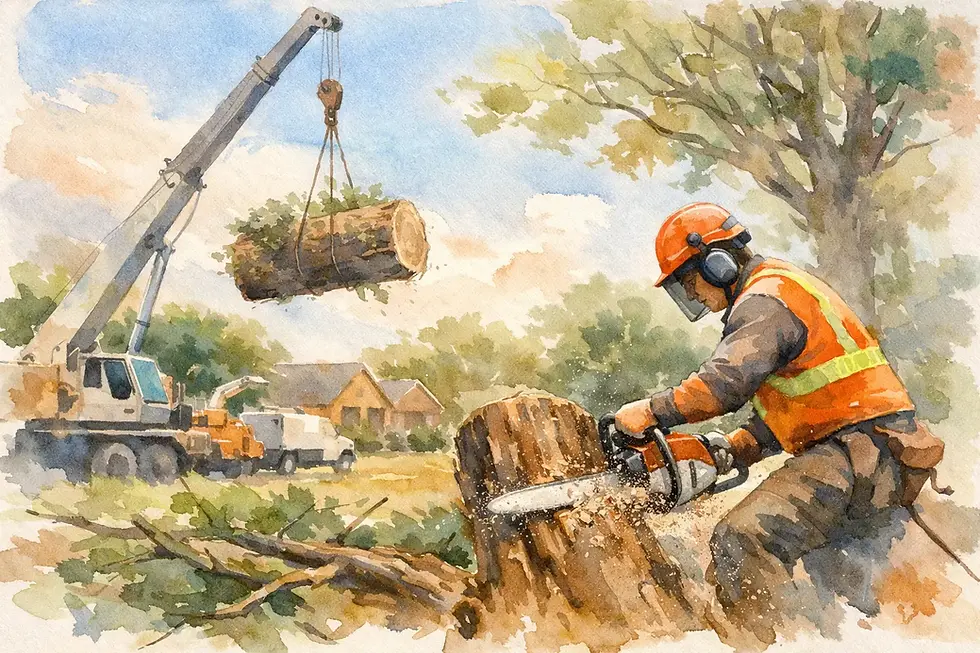
Do not attempt emergency tree work with a ladder, chainsaw, pickup truck, or rope. Removing a hazardous tree often requires controlled rigging, elevated access, specialized cutting techniques, and a plan for each section of wood. The danger is not limited to the tree itself. A poorly directed cut can damage roofs, fences, landscaping, vehicles, and nearby structures.
Why Professional Planning Matters in Tight DFW Properties
Dallas-Fort Worth properties frequently present difficult removal conditions. Mature trees may stand between homes, over backyard pools, near busy streets, or alongside utility corridors. Commercial properties add parking lots, storefronts, pedestrian traffic, irrigation systems, and scheduled operations that must be protected during the work.
A professional crew starts by identifying drop zones, overhead obstacles, access routes, and the safest sequence for dismantling the tree. In a confined space, the tree may be removed in controlled sections rather than felled in one piece. Ropes and rigging can lower heavy limbs away from roofs and fences, while equipment selection depends on access, soil conditions, tree size, and the space available.
Insurance and training matter here. Tree work carries real risks, and property owners should not have to absorb the consequences of an uninsured or poorly equipped crew. Ask whether the company is fully insured, how it plans to protect nearby property, and whether an arborist can evaluate trees where preservation may still be possible.
At Tree Masters Tree Service, field experience serving North Texas since 1988 is paired with certified arborist leadership, so recommendations can account for both immediate safety and the long-term condition of the trees that remain.
Storm Damage Does Not Always Show Up Right Away
After a major windstorm, the obvious cleanup gets attention first: fallen limbs, blocked driveways, and broken branches. Less visible damage can be just as serious. A branch may be cracked but held in place by bark, or a tree may lose roots without falling immediately. Heat and drought can later compound that storm damage, causing a weakened tree to decline over the following months.
A post-storm inspection is especially useful for large trees near homes, power lines, pools, outdoor living areas, and high-traffic business areas. Look upward for torn branch attachments and downward for soil movement, root damage, or fresh cracks in the trunk. From the ground, it can be difficult to tell whether a damaged limb is secure or only temporarily supported by surrounding branches.
Prompt assessment can also prevent small issues from becoming emergency calls. Removing a split limb under controlled conditions is generally safer and more predictable than waiting until it breaks during the next storm.
Removal Is Only Part of Restoring the Property
Once a hazardous tree has been removed, the work is not necessarily finished. Stumps can interfere with replanting, mowing, fencing, drainage improvements, and future construction. Stump grinding can remove the remaining obstacle below grade, though the appropriate depth and cleanup plan depend on whether the area will become turf, a planting bed, pavement, or a building site.
For larger losses, consider what replaces the tree's function. A mature shade tree can affect cooling costs, privacy, erosion control, and curb appeal. Replanting may be appropriate, but the new species and location should fit the available space, overhead utilities, soil, and desired mature size. Planting another large-growing tree directly beneath power lines or too close to a foundation simply creates a future maintenance issue.
On commercial lots or development sites, hazardous tree removal may also be part of broader clearing and preservation planning. Identifying which trees should be protected before equipment arrives can help prevent avoidable damage to valuable specimens.
Make the Safe Decision Before the Next Storm
A questionable tree does not always need immediate removal, but it does need an honest assessment before weather forces the decision. If you see a new lean, major crack, root movement, extensive decay, or damaged limbs over a target, treat it as a safety concern rather than a weekend project. A qualified evaluation can clarify whether pruning, monitoring, treatment, or removal is the responsible next step, helping protect your property and the people who use it.


Comments