





Residential Tree Removal Guide for DFW Homes
- Gary Zimmerman - Certified Arborist - Tree Masters
- Jul 14
- 6 min read
A large tree can add shade, character, and value to a North Texas property. It can also become a serious concern when roots lift a driveway, limbs reach a roofline, or a storm-damaged trunk starts leaning toward the house. This residential tree removal guide helps Dallas-Fort Worth homeowners make a clear, safe decision before a tree problem becomes a property emergency.
Tree removal is not automatically the right answer. Many trees can be pruned, treated, braced, or monitored instead. But when removal is necessary, planning the work correctly protects your home, your family, neighboring property, and the trees worth keeping.
When a Tree Should Be Removed
The clearest reason to remove a tree is an immediate safety risk. A tree that has cracked at the trunk, uprooted after heavy rain, or dropped major limbs may fail without much warning. In DFW, high winds, saturated soil, lightning, drought stress, and extreme heat can all expose weaknesses that were not obvious before.
Look closely at changes in the tree's structure. A new lean, a split trunk, deep cracks, large dead branches, hollow areas, mushrooms growing at the base, or soil heaving around the root zone can indicate a compromised tree. These signs do not always mean the entire tree must come down, but they do justify a professional assessment.
Location matters as much as condition. A declining tree in an open portion of a large yard may be manageable for a period of time. The same tree over a bedroom, driveway, pool, fence, or power line requires a much faster decision. The consequences of failure are higher, and so is the need for trained removal planning.
A tree may also need removal because it is causing ongoing damage. Invasive roots can affect sidewalks, patios, irrigation components, and foundations, although root-related foundation concerns should be evaluated carefully rather than assumed. Crowded trees can compete for water and sunlight, while a poorly placed volunteer tree may eventually outgrow the space between a home and a fence.
Start With an Arborist Evaluation
Before scheduling removal, have the tree evaluated by someone qualified to identify structural defects, disease, insect damage, and preservation options. A certified arborist can help separate a tree that looks rough from one that is genuinely hazardous.
This step is especially valuable for mature oaks, pecans, elms, and other established shade trees. Removing a healthy, valuable tree can change a yard's comfort, drainage, and curb appeal for decades. In some cases, selective pruning, cabling, soil care, or disease treatment can address the issue while preserving the tree.
On the other hand, waiting too long on a hazardous tree can make removal more expensive and more dangerous. A tree that can be climbed and carefully dismantled today may require a crane or emergency response after it falls into another tree or onto a structure. The practical goal is not to remove every imperfect tree. It is to act before a known risk turns into an avoidable loss.
What Affects the Cost and Scope of Removal?
No two tree removals are the same. Estimates should reflect the actual work required, not just the height of the tree. A 30-foot tree standing in an open front yard may be straightforward. A similarly sized tree behind a house, over a pool, and surrounded by landscaping may require much more time, rigging, and protection.
Several conditions shape the scope of residential tree removal:
Tree height, trunk diameter, lean, and overall condition
Access for crews, trucks, loaders, cranes, or stump grinding equipment
Distance from roofs, fences, vehicles, utility lines, and neighboring homes
Whether limbs and logs must be hauled away or can remain on-site
Whether stump grinding, surface-root work, or site cleanup is included
Ask for a written estimate that explains what will be removed and what will remain. For example, “tree removal” may mean cutting a tree to ground level, while stump grinding is often a separate service. If you want wood hauled away, chips removed, or a specific area protected from equipment, make sure those details are discussed before work begins.
The lowest bid is not always the lowest-risk choice. Proper insurance, trained crews, appropriate equipment, and controlled lowering methods cost money because they reduce the chance of damage. When a tree is close to a home or utility line, experience matters more than a quick price comparison.
Check Permits, HOA Rules, and Utility Concerns
Permit requirements vary across the Metroplex. Some cities regulate the removal of protected, heritage, or larger-diameter trees, particularly during construction or redevelopment. HOA rules may also apply, even when city permits do not. Do not assume that a tree on your property can be removed without review.
A qualified tree service can help identify common local requirements, but the property owner should understand any approval obligations before work starts. Save copies of permits, HOA correspondence, and estimates, especially if the removal is part of an insurance claim or a larger landscaping project.
Utilities require special attention. Never attempt to prune or remove a tree that is touching or near energized power lines. Call the utility provider if a limb is in contact with electrical equipment or if a line is down. A professional tree crew can manage many difficult situations, but electrical hazards require coordination and the right clearance procedures.
Underground utilities matter too. If stump grinding, excavation, or root removal is planned, utility locations should be identified before equipment enters the work area. This protects gas, water, irrigation, communications, and electrical lines from costly damage.
How Professionals Remove a Tree Safely
A safe removal begins before the first cut. The crew evaluates the tree's lean, decay, wind exposure, branch weight, access routes, and nearby targets. They establish a drop zone, determine whether sections can be lowered by rope, and decide if specialized equipment is needed.
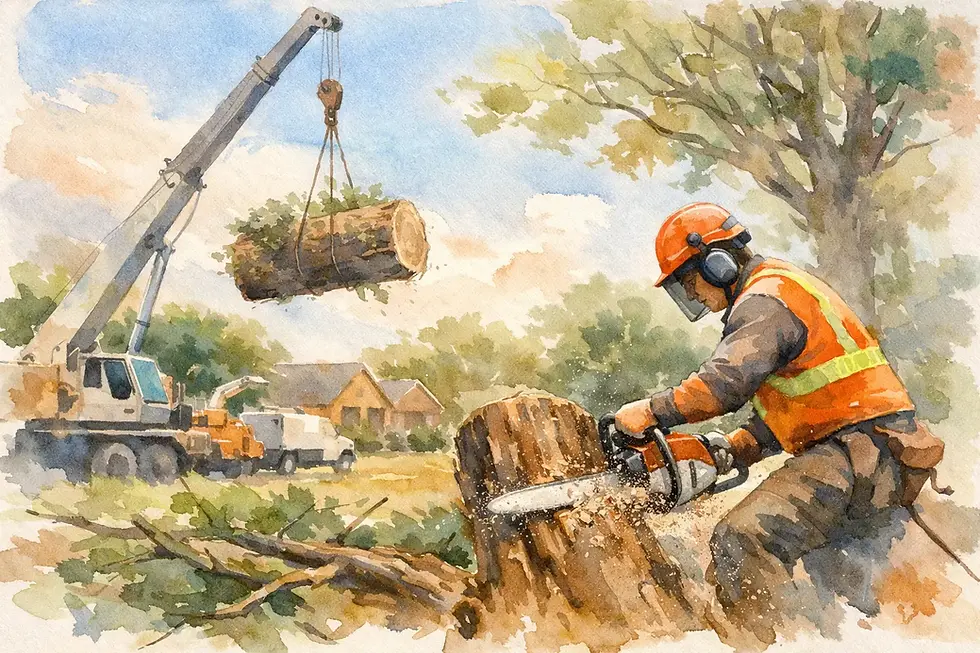
In a tight residential setting, the tree is usually dismantled in manageable sections rather than simply felled in one direction. Climbers or aerial-lift operators remove limbs first, then reduce the trunk in sections. Ropes, rigging devices, and ground crews control pieces so they do not strike roofs, fences, gardens, or hardscapes.
Property protection should be part of the plan. This may include placing mats where equipment will travel, moving vehicles from the work area, protecting landscape features, and communicating with neighbors when access or noise could affect them. A responsible crew also plans for cleanup, because scattered brush and heavy wood can create hazards after the main work is complete.
Be cautious of anyone who proposes topping a tree as a substitute for proper removal or pruning. Topping leaves large wounds, encourages weak regrowth, and can make an already stressed tree more hazardous. If a tree cannot be retained safely at an appropriate size, full removal may be the more responsible choice.
Do Not Overlook the Stump
Once the tree is removed, the stump remains a practical decision. Leaving it in place may be acceptable in a wooded area or where it is not in the way. Near a lawn, patio, driveway, or future planting area, stump grinding is usually the cleaner option.
Grinding removes the visible stump below grade and creates wood chips that can be reused in some landscape areas or hauled away. It does not remove every root across the yard. Large roots naturally decay over time, and aggressive root excavation can disturb soil, nearby structures, and healthy trees.
If you plan to replant in the same location, discuss it before grinding. The new tree may need to be set several feet away from the old stump area to avoid compacted soil, remaining roots, and nutrient competition. Choose a species that fits the mature space, not just the size it is when planted.
Prepare Your Property Before the Crew Arrives
A little preparation keeps the project safer and more efficient. Move vehicles out of the driveway and garage area, secure pets indoors, and clear outdoor furniture, grills, planters, and children's play equipment from the work zone. Tell the crew about irrigation heads, septic components, invisible fences, or other features that may not be visible from the surface.
If a neighbor's fence, driveway, or yard sits close to the tree, let them know about the scheduled work. Good communication prevents surprises and gives them time to move vehicles or protect their own outdoor spaces. For trees near shared property lines, confirm ownership and responsibilities before removal begins.
During the work, keep family members and pets away from the active area. Tree removal is controlled work, but it is still heavy work involving falling sections, moving equipment, and active rigging. The safest viewing distance is well outside the crew's established work zone.
Choose a Company Built for the Work
For residential tree removal, look for a company that is fully insured, experienced with tight-access properties, and able to explain its plan in plain language. Ask whether the crew will handle hauling, cleanup, stump grinding, and emergency conditions if the tree's condition changes during the job.
Tree Masters Tree Service has served North Texas since 1988, bringing certified arborist leadership and safety-focused field experience to routine removals and urgent storm damage. The right crew should leave you with more than an empty space where a tree stood. It should leave your property safer, cleaner, and ready for what comes next.


Comments